You step outside to grab the mail, and there it is — a faint green tint spreading across the north side of your house. Last month it was barely noticeable. Now it looks like someone took a damp brush and dragged it down the siding. You clean it off, and six weeks later, it's back.
If you live in Sherman, Denison, or anywhere across the Texoma region, this isn't a sign that your home is somehow defective. It's not bad luck, and it's not because your neighbors know something you don't. Your siding is turning green because North Texas has a near-perfect climate for algae growth — and understanding why is the first step to stopping it.
What Is the Green Stuff on Your Siding?
That green discoloration is algae — a living, photosynthetic organism that colonizes exterior surfaces where moisture and organic matter are present. It's not mold. It's not mildew. It's not dirt. It's a living organism that feeds on the pollen, dust, and organic debris that settles on your siding throughout the year.
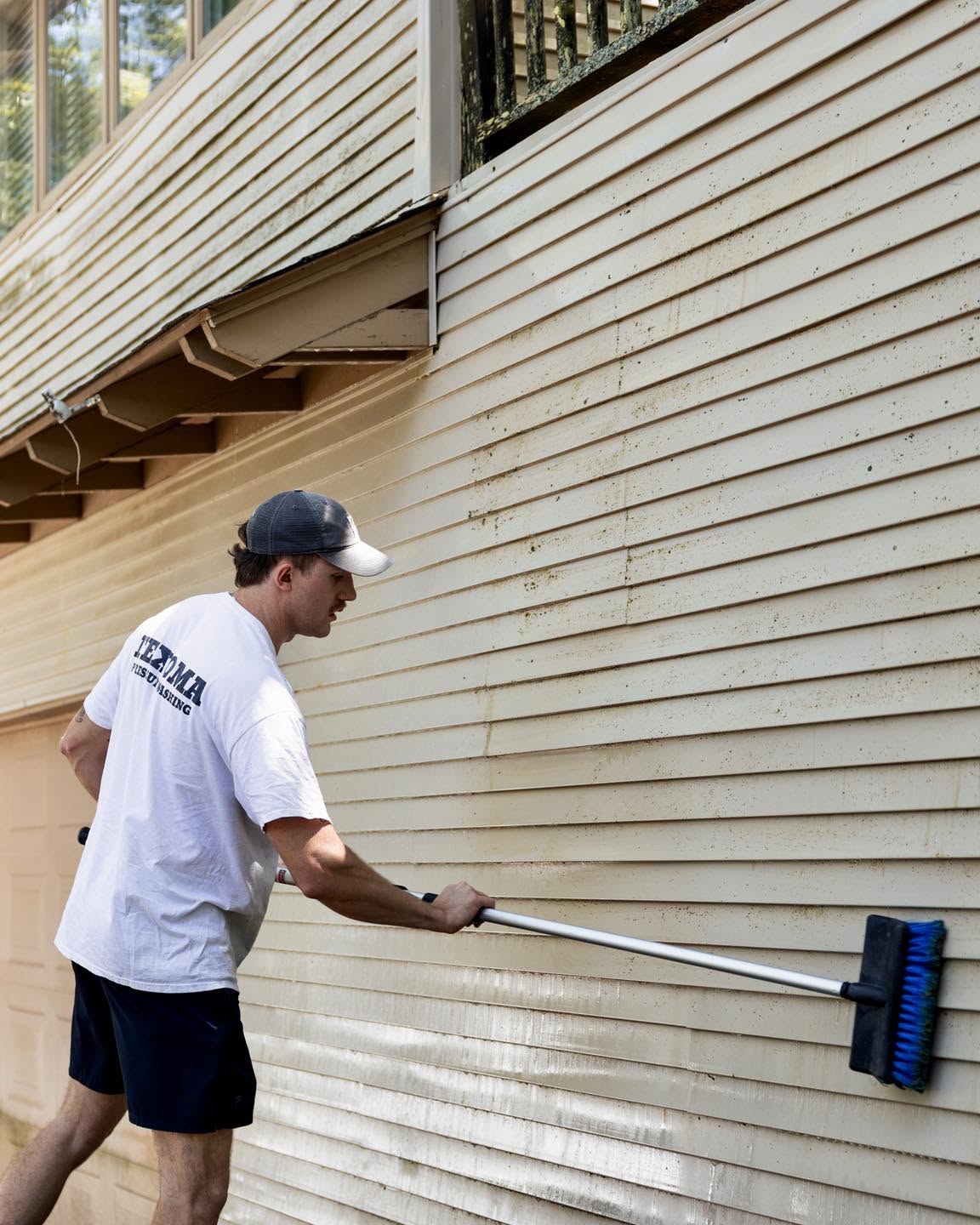
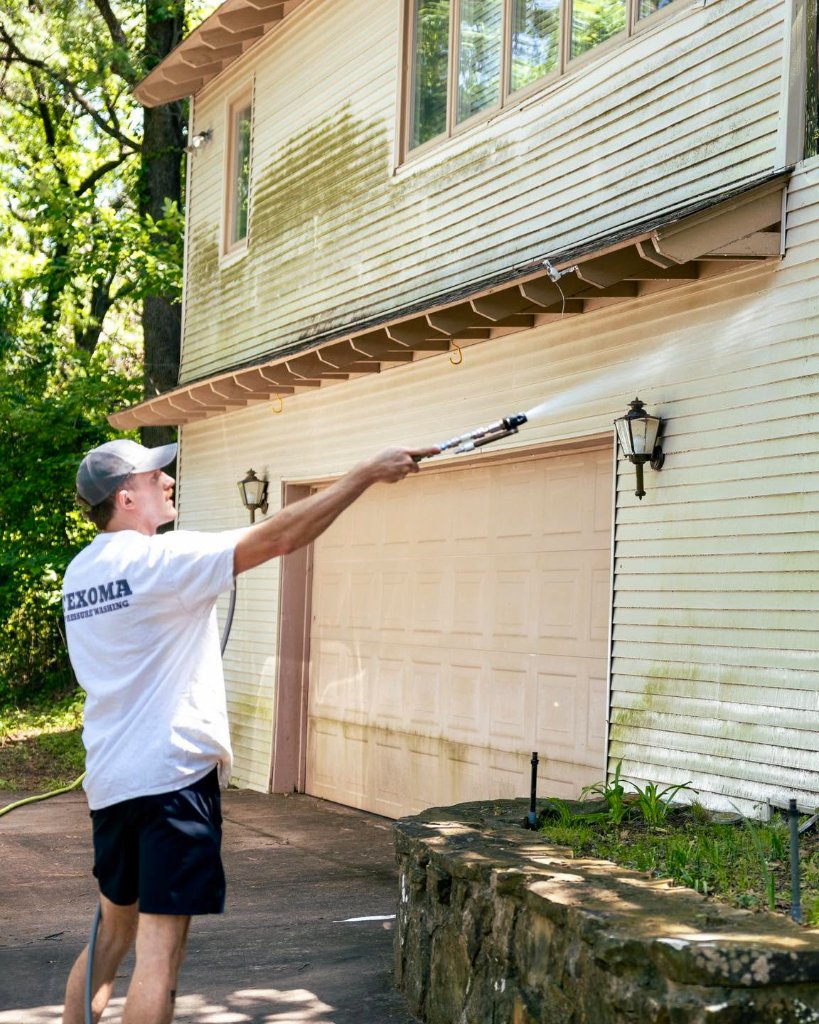
Algae appears in shades of green, dark green, and sometimes nearly black. On vinyl siding, it shows up as streaks running downward from areas where water flows — around gutters, downspouts, window sills, and roof valleys. On brick and stucco, it creates a darker, more uniform discoloration that's easy to mistake for permanent staining.
Here's the important part: algae isn't just sitting on the surface. It's rooted into the microscopic texture of your siding. That's why a garden hose rinse makes it look better for a few days, but the green returns within weeks. The organism is still alive underneath.
Why North Texas Is an Algae Accelerator
If it feels like homes in our area get green faster than homes in other parts of the country, you're right. North Texas and Southern Oklahoma sit in a climate zone that stacks every condition algae needs to thrive:
Sustained Humidity
From late spring through early fall, relative humidity in the Sherman-Denison area regularly sits above 70%. When the air is that moist, exterior surfaces stay damp for extended periods — especially in the early morning and overnight. Algae doesn't need standing water to grow. It just needs surface moisture, and our climate delivers it almost daily.
Warm Temperatures
Algae grows most aggressively between 60°F and 85°F — which describes a good portion of the Texoma calendar from March through October. Unlike northern climates where winter freezing kills off surface growth, our mild winters allow algae to continue colonizing, just at a slower rate.
Heavy Pollen Events
Every spring, North Texas gets blanketed in a layer of yellow-green pollen that coats cars, patios, and siding. That pollen isn't just an annoyance — it's a food source. Algae feeds on organic matter, and pollen is essentially a nutrient delivery system dropped across every exterior surface of your home. Combined with humidity, it's a growth catalyst.
Tree Canopy and Shade
Many neighborhoods in Sherman, Denison, Pottsboro, and surrounding communities were built among mature trees. Those trees provide shade, which means siding dries more slowly after rain and dew. Less sun equals more moisture equals faster algae growth. North-facing walls are the most vulnerable because they receive the least direct sunlight year-round.
Lake Proximity
Properties near Lake Texoma, or in low-lying areas near creeks and tributaries, experience higher ambient moisture. The air simply carries more water, and that moisture settles on siding every night. If you live in Pottsboro, Kingston, or along the lake, you've probably noticed your siding turns green faster than friends who live in more exposed, inland neighborhoods.
How Fast Does Algae Actually Grow?
The speed of algae growth depends on the specific conditions around your home, but here's a general timeline for the Texoma area:
| Condition | Time to Visible Algae | |---|---| | Full sun, open exposure, no trees | 18–24+ months | | Typical suburban lot, mixed shade | 12–18 months | | Heavy tree cover, north-facing walls | 6–10 months | | Lake-area or heavily wooded property | 4–8 months |
What surprises most homeowners is how fast it happens in shaded conditions. A north-facing wall under mature trees in Pottsboro or Denison can develop visible green streaks in a single growing season. By the time you notice it, the algae has already been colonizing the surface for weeks.
Which Surfaces Are Most Vulnerable?
Algae isn't picky, but it does prefer certain surfaces:
Vinyl Siding
The most common siding in North Texas. Vinyl has a textured surface that traps pollen, dust, and moisture — creating an ideal substrate for algae. The grooves and overlaps in vinyl panels give algae a foothold that's difficult to rinse away.
Painted Wood and Hardie Board
Porous surfaces that absorb moisture. Once algae establishes itself in the paint texture or fiber matrix, it's particularly stubborn. Left untreated, it can cause premature paint failure.
Stucco and Dryvit
The rough, porous texture of stucco is essentially a sponge for moisture and organic matter. Algae on stucco often appears as a dark, blotchy discoloration that homeowners mistake for permanent staining.
Brick and Mortar
While brick seems impervious, the mortar joints are porous and hold moisture. Algae colonizes mortar lines first, then spreads across the brick face. Older brick with weathered surfaces is especially susceptible.
Why Pressure Washing Alone Makes It Worse
Here's where most homeowners go wrong: they rent a pressure washer, blast the siding, and feel satisfied when the green disappears. Then it comes back in three weeks — often worse than before.
There are two problems with this approach:
Problem 1: You're Not Killing the Organism
Pressure washing removes the visible layer of algae but doesn't kill the organism at its root. The algae is still alive in the microscopic texture of the siding, and it regrows rapidly — especially in our climate. It's like mowing a weed without pulling the root.
Problem 2: You're Etching the Surface
High pressure actually damages siding. It forces water behind panels (leading to moisture intrusion and potential mold inside wall cavities), etches the surface texture (creating a rougher surface that catches dirt and pollen faster), and can void manufacturer warranties. The irony is that pressure-washed siding often gets dirty faster afterward because the etched surface holds onto contaminants more aggressively.
The Solution: Soft Washing
Soft washing is the industry-standard method for cleaning home exteriors — and it's fundamentally different from pressure washing. Instead of relying on force, soft washing uses low-pressure water (comparable to a garden hose) combined with specialized biodegradable detergents that kill algae, mold, and mildew at the cellular level.
Here's how it works:
- ▸Application — The cleaning solution is applied to the siding at low pressure, coating the surface evenly
- ▸Dwell time — The detergent is allowed to sit and penetrate the siding texture, breaking down algae, mold, and organic matter at the root
- ▸Kill — The active ingredients eliminate the organism completely — not just the visible layer
- ▸Gentle rinse — The surface is rinsed with low-pressure water, washing away dead growth and residue
Because the organism is actually dead — not just rinsed off — the siding stays clean far longer. A properly soft-washed home in the Texoma area typically stays clean for 12 to 24 months, compared to 3 to 6 weeks after a pressure wash.
How to Slow Algae Growth Between Cleanings
You can't eliminate algae growth in North Texas — the climate won't allow it. But you can slow it down significantly:
Trim Back Vegetation
Tree branches and shrubs that touch or shade your siding block sunlight and trap moisture. Trimming them back so air and sun can reach the surface makes a real difference in how fast algae returns.
Check Downspout Drainage
If downspouts dump water near the foundation, that moisture wicks up the siding. Extend downspouts away from the house and ensure grading slopes away from the walls.
Clean Gutters Regularly
Overflowing gutters send water cascading down siding, creating persistent moisture that algae loves. Gutter cleaning is one of the most effective preventive steps you can take.
Schedule Regular Soft Washing
The single most effective prevention is regular professional soft washing every 12 to 24 months. Because soft washing kills algae at the root, the surface starts clean and stays clean longer — rather than getting a partial clean that regrows within weeks.
When to Call a Professional
If you're seeing any of the following, it's time to schedule a professional house wash:
- ▸Green or dark streaks on any side of the home
- ▸A noticeable difference in color between sun-exposed and shaded walls
- ▸Dark patches around gutters, downspouts, or roof valleys
- ▸Siding that feels slick or slimy after rain
- ▸Algae returning within weeks of a DIY cleaning
A professional soft wash will remove the growth completely, protect your siding from long-term damage, and keep your home looking clean for months longer than pressure washing alone.
If your home is developing green algae faster than you can keep up with, we can help. Texoma Pressure Washing provides professional house washing and soft washing throughout Sherman, Denison, Pottsboro, and the greater Texoma area. Request a free quote and let's get your siding clean and keep it that way.
Frequently Asked Questions
Related Service
House Washing
Deep clean your siding and exterior surfaces using advanced soft washing technology for safe, effective results.
Learn About This Service