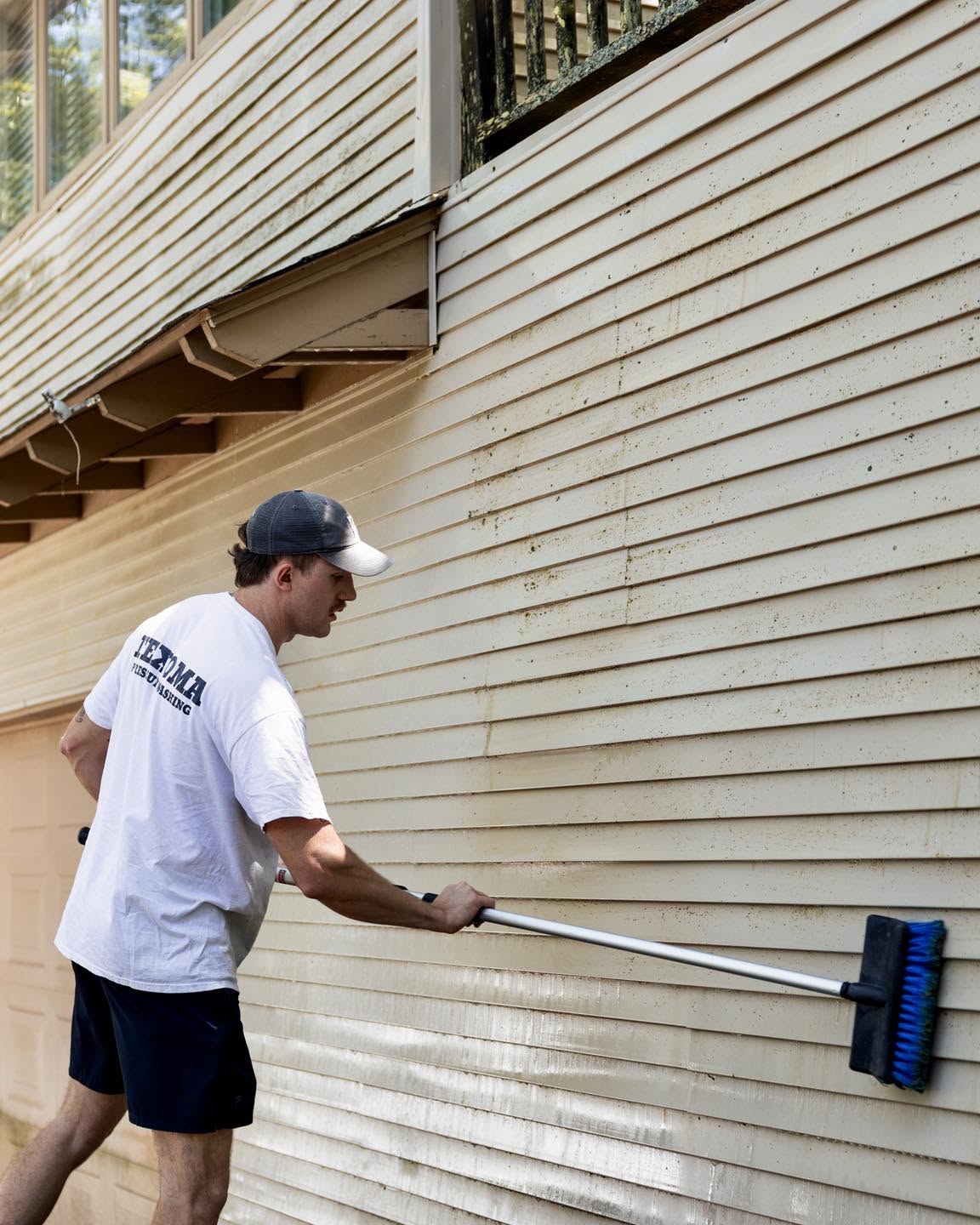
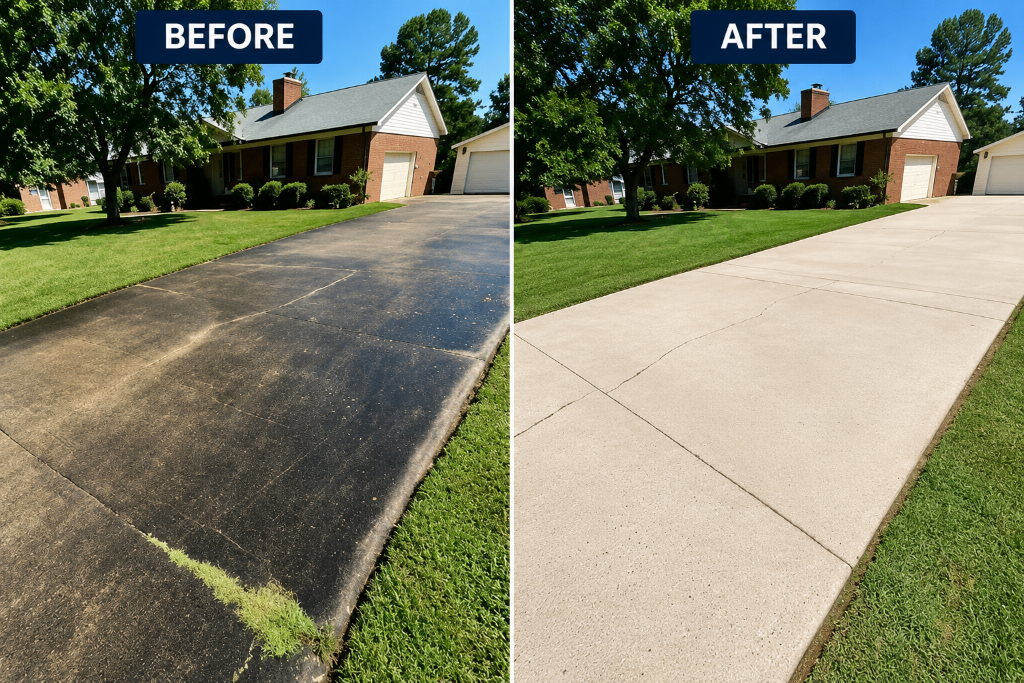
You're standing in the driveway, looking at your house, and you notice the difference between the section you just cleaned and the section you didn't get to. The contrast is striking — one side looks bright and fresh, the other looks dark, streaky, and old.
But have you ever stopped to wonder what that "dark stuff" actually is? What's on your siding? What's making those streaks on your roof? What's turning your driveway green and black?
Most homeowners think of exterior cleaning as "removing dirt." In reality, professional cleaning removes a complex ecosystem of living organisms, environmental deposits, and chemical stains — each requiring a different approach. Understanding what's actually on your home is the first step to understanding why professional cleaning works so much better than a garden hose or a rental pressure washer.
Here's the science behind what professional pressure washing and soft washing actually remove from your home's exterior.
Algae: The Green and Black Colonizer
What It Is
Algae is a photosynthetic organism — meaning it uses sunlight to produce energy, like a plant. But unlike plants, it doesn't have roots, stems, or leaves. It colonizes surfaces as a thin film or layer, feeding on organic matter and moisture.
On siding, algae appears as green or dark green streaks, usually running downward from areas where water flows. On roofs, a specific type called Gloeocapsa magma appears as black streaks running down from the ridge. On concrete, algae creates a green or dark film, particularly in shaded areas.
How It Grows
Algae reproduces via airborne spores that settle on surfaces. Once established, it feeds on:
- ▸Pollen — North Texas spring pollen is a major food source
- ▸Organic dust — decomposing plant matter carried by wind
- ▸Limestone filler — in asphalt shingles, Gloeocapsa magma specifically feeds on this material
- ▸Moisture — from humidity, rain, dew, and sprinkler overspray
Algae grows fastest in warm, humid conditions — which describes North Texas from March through October. Shaded surfaces grow algae faster because they stay damp longer and receive less UV light to kill the organism.
How Professional Cleaning Removes It
Pressure washing alone doesn't kill algae. It removes the visible layer but leaves the organism alive in the microscopic texture of the surface. Within weeks, the algae regrows from the surviving cells.
Soft washing kills algae at the root. Specialized biodegradable detergents break down the organism at the cellular level. The solution is applied at low pressure, allowed to dwell on the surface, and then gently rinsed. Because the organism is dead — not just rinsed away — the surface stays clean for 12 to 24 months.
Mold: The Fuzzy Invader
What It Is
Mold is a fungus — not a plant or an algae. It grows as fuzzy, raised patches, typically on wood surfaces (decks, fences, trim) where moisture persists. Unlike algae, which forms a flat film, mold has a three-dimensional structure.
Where It Grows
Mold is most common on:
- ▸Wood decks and fences in shaded, damp areas
- ▸Siding near persistent moisture sources (leaky gutters, sprinkler overspray)
- ▸Areas with poor ventilation and prolonged shade
- ▸Surfaces where organic matter has accumulated
The Risk
Unlike algae, which is primarily a cosmetic and surface-damage concern, mold can penetrate wood fibers and cause structural deterioration — rot, softening, and eventual failure. If you see fuzzy, raised growth on wood surfaces, it should be addressed promptly.
How Professional Cleaning Removes It
Soft washing with appropriate fungicidal detergents kills mold at the root. For wood surfaces, the process is more careful — using controlled pressure and wood-specific cleaners to remove growth without damaging the wood fibers. For severe mold on wood, our trusted partner at North Texas Pressure Wash specializes in wood restoration and preparation.
Mildew: The Flat Stainer
What It Is
Mildew is also a fungus, but it grows differently than mold. It appears as a flat, powdery growth — usually dark on hard surfaces like siding and concrete. You'll see it as dark spots or patches on vinyl, brick, and stucco, especially on north-facing walls.
How It Differs from Mold and Algae
- ▸Algae — green or black, flat film, photosynthetic
- ▸Mildew — dark, flat, powdery, fungal
- ▸Mold — fuzzy, raised, three-dimensional, fungal
Mildew is often what homeowners are seeing when they describe "black stuff" on their siding. It's particularly common in the humid Texoma climate, where overnight moisture and warm temperatures create ideal growth conditions.
How Professional Cleaning Removes It
Soft washing with appropriate detergents kills mildew at the root, just as it does with algae. The key is allowing sufficient dwell time for the solution to penetrate and eliminate the organism before rinsing.
Lichen: The Crusty Clinger
What It Is
Lichen is a composite organism — a symbiotic combination of algae and fungus growing together. It appears as crusty, white, gray, or greenish spots that cling tightly to surfaces, particularly roofs, concrete, and brick.
Why It's Difficult
Lichen is notoriously stubborn. It attaches firmly to surface textures and can be difficult to remove without damage. Scraping or high-pressure blasting can damage the surface underneath — particularly on roof shingles, where forcing lichen off can dislodge protective granules.
How Professional Cleaning Removes It
Soft-wash treatment is the correct approach for lichen. The solution kills the organism at the root, and the dead lichen gradually breaks down and washes away with rainfall over the following weeks. This is a slower process than algae removal — it can take several weeks for lichen to fully clear after treatment — but it's the safe, correct method that doesn't damage the surface.
Dirt, Dust, and Pollen: The Environmental Layer
What It Is
Beyond living organisms, your home's exterior accumulates a layer of environmental debris:
- ▸Dust and dirt — carried by wind, especially during dry periods
- ▸Pollen — heavy spring accumulation that coats every surface
- ▸Road grime — petroleum residue and particulates from traffic
- ▸Organic debris — decomposing leaves, seeds, and plant matter
Why It Matters
This environmental layer isn't just cosmetic. When it mixes with moisture — from humidity, rain, or dew — it creates a nutrient-rich substrate that feeds algae, mold, and mildew growth. In other words, the dirt on your home isn't just dirt; it's food for the organisms that cause staining and damage.
How Professional Cleaning Removes It
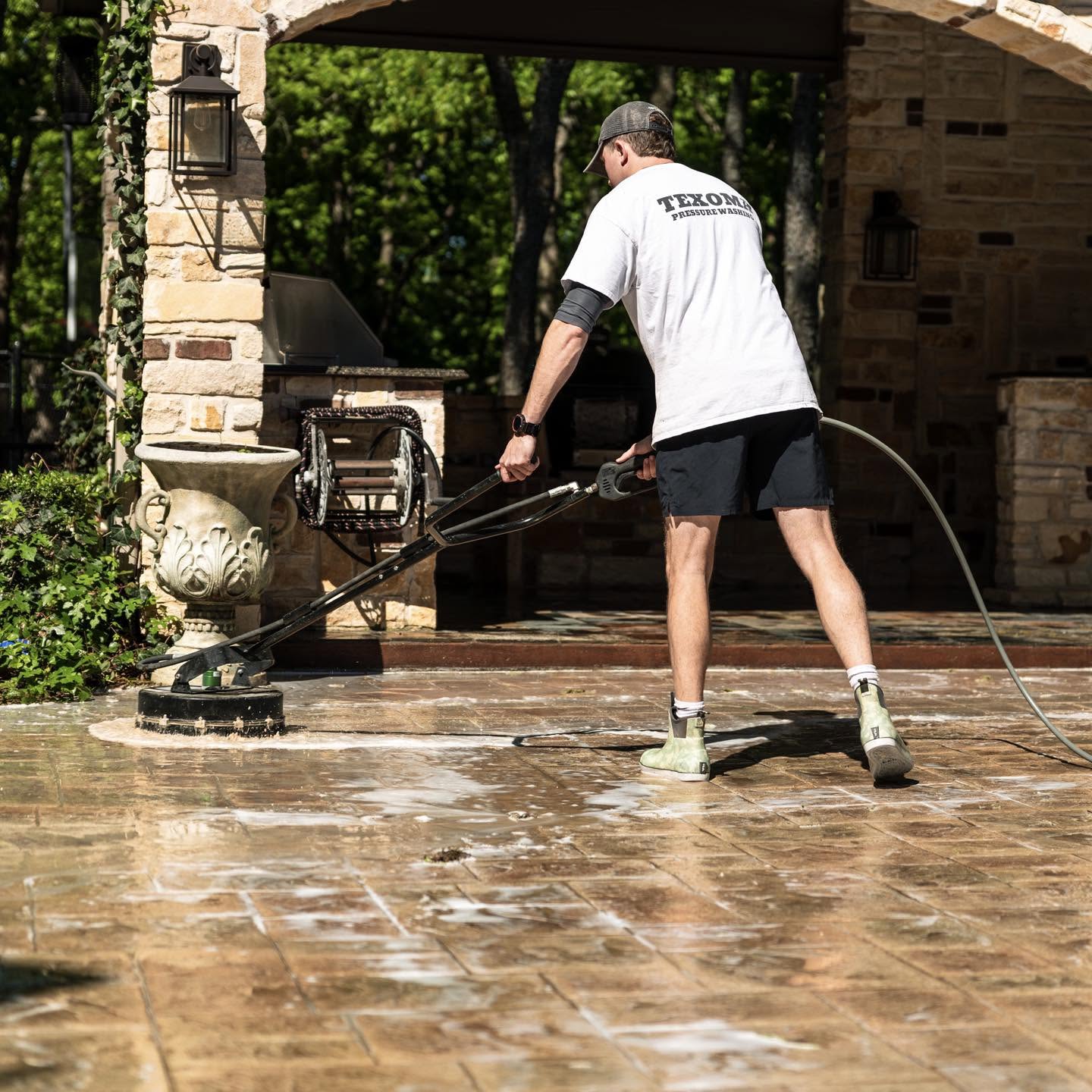
For siding and roofs, soft washing removes this layer along with the organic growth. For concrete, a flat surface cleaner with appropriate pre-treatment lifts the embedded dirt and debris from the pores of the surface — something a garden hose or handheld wand can't achieve.
Rust Stains: The Chemical Discoloration
What Causes Them
Rust stains on concrete, siding, and brick come from several sources:
- ▸Metal furniture — patio furniture, railings, and fixtures
- ▸Fertilizer — iron-containing fertilizers that stain concrete
- ▸Irrigation systems — well water with high iron content
- ▸Nails and fasteners — corroding metal in fencing, trim, or roofing
Rust appears as orange-brown discoloration that penetrates porous surfaces like concrete and brick.
Why Pressure Alone Doesn't Work
Rust is a chemical compound (iron oxide) that bonds to surface materials. Increasing water pressure doesn't break this chemical bond — and in some cases, blasting a rust stain with high pressure can actually force it deeper into the surface pores.
How Professional Cleaning Removes It
Professional rust removal uses chemical pre-treatment — specialized rust-dissolving agents that break the iron oxide bond at the molecular level. The stain is lifted chemically, then the surface is cleaned with appropriate pressure. This is a fundamentally different approach than "more pressure."
Oil and Grease: The Penetrating Stains
What Causes Them
On driveways and concrete, oil and grease stains come from:
- ▸Vehicle leaks (engine oil, transmission fluid, power steering fluid)
- ▸Lawn equipment (mowers, trimmers)
- ▸Bicycle chains and mechanical equipment
- ▸Food spills (near outdoor cooking areas)
Why They're Stubborn
Concrete is porous. Oil and grease are liquid, so they soak into the surface rather than sitting on top. Fresh stains are easier to treat; old, set-in stains may have penetrated too deeply for complete removal.
How Professional Cleaning Removes It
Professional driveway cleaning uses a degreasing pre-treatment that breaks down oil at the molecular level before surface cleaning. The degreaser penetrates the concrete pores, breaks the petroleum bonds, and lifts the oil to the surface where it can be rinsed away. The flat surface cleaner then provides uniform cleaning across the entire area.
Oxidation: The Chalky Film
What It Is
Oxidation is a chemical reaction between exterior materials and oxygen, accelerated by UV exposure. On vinyl siding, it appears as a chalky, dull film. On painted surfaces, it shows as fading and a powdery residue. On metal surfaces, it's the familiar rust.
Why It Matters
Oxidation is the surface of the material literally breaking down. It's not a contaminant that's been deposited — it's the material itself degrading. Advanced oxidation can't be reversed, but the chalky residue can be removed to restore appearance, and regular cleaning removes contaminants that accelerate the process.
How Professional Cleaning Addresses It
Professional house washing can remove the chalky oxidation residue, restoring a cleaner, brighter appearance. For advanced oxidation on vinyl siding, specialized low-pressure chemical treatments may be needed. Regular cleaning slows oxidation by removing the contaminants that accelerate the breakdown.
The Professional Difference: Science Over Force
Here's the fundamental difference between DIY pressure washing and professional exterior cleaning:
DIY approach: Use high pressure to blast contaminants off the surface. This removes visible dirt but:
- ▸Doesn't kill living organisms (they regrow within weeks)
- ▸Can damage surfaces (etching, water intrusion, voided warranties)
- ▸Creates uneven results (zebra stripes from handheld wands)
- ▸Can set stains deeper into porous surfaces
Professional approach: Match the right chemistry and pressure to each contaminant and surface:
- ▸Soft washing with biocidal detergents kills algae, mold, and mildew at the root
- ▸Chemical pre-treatment breaks down rust, oil, and organic stains at the molecular level
- ▸Flat surface cleaners deliver uniform pressure for consistent concrete cleaning
- ▸Controlled pressure protects surfaces while effectively removing contamination
The result isn't just "cleaner" — it's cleaner for longer, with no damage to the surfaces being cleaned.
See the Difference for Yourself
The best way to understand what professional cleaning removes is to see it. The contrast between a professionally cleaned surface and one that hasn't been maintained is dramatic — and once you see it, you'll never look at "dirt" on your home the same way again.
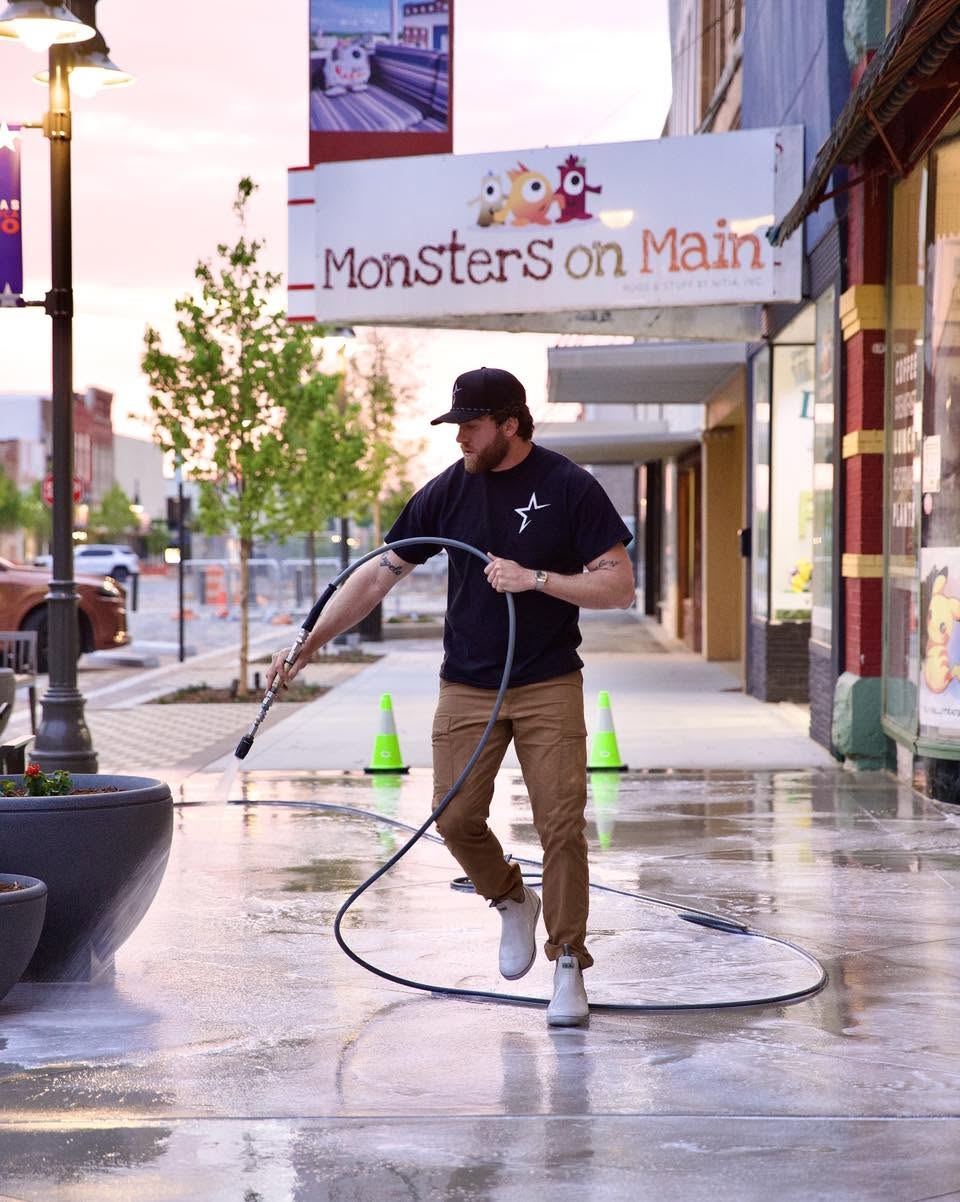
If your home's exterior has algae, mold, mildew, staining, or discoloration, Texoma Pressure Washing can help. We provide professional house washing, roof cleaning, driveway cleaning, sidewalk cleaning, and commercial pressure washing throughout Sherman, Denison, Pottsboro, and the surrounding Texoma area.
Request a free quote or call (903) 444-2704 — let's remove what's actually on your home and protect your property the right way.
Frequently Asked Questions
Related Service
House Washing
Deep clean your siding and exterior surfaces using advanced soft washing technology for safe, effective results.
Learn About This Service