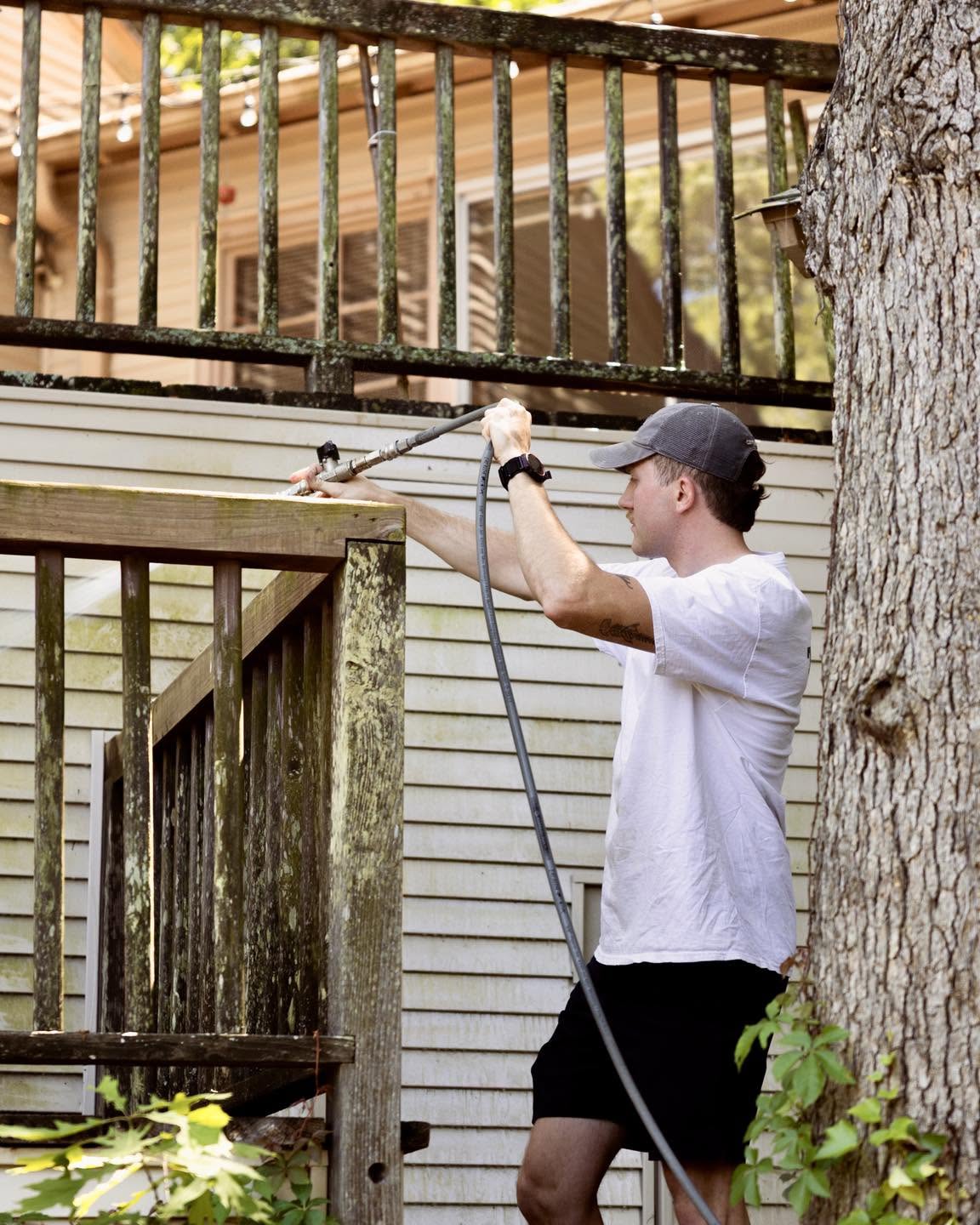
If you live around Sherman or Denison, you've seen it: green streaks on siding, black stains on a roof, a slick film on the driveway after rain. It's not dirt. It's living organisms taking hold on your home's exterior.
And honestly? It's almost impossible to avoid in our climate. High humidity, warm temperatures, seasonal rainfall, and the pollen blanket that covers everything in spring — that's the perfect recipe for mold, mildew, and algae to thrive on exterior surfaces.
The good news: once you understand what you're looking at and why it keeps coming back, it's very manageable. Here's what every Texoma homeowner should know.
Mold, Mildew, and Algae: What's the Difference?
People use these terms interchangeably, but they're different organisms with different behaviors.
Algae
The green or dark staining on siding, concrete, and roofs. It thrives in moist, shaded areas and feeds on organic matter. On roofs, the black streaks you see are a specific type of algae that feeds on the limestone filler in modern asphalt shingles — breaking them down over time.
Algae isn't directly harmful to people, but it's destructive to surfaces. It breaks down materials, creates slip hazards, and significantly dulls your home's appearance.
Mildew
A fungus that appears as a flat, powdery growth — usually dark on hard surfaces. On siding, you'll see it as dark spots or patches, especially on north-facing and shaded walls. Mildew can cause permanent staining if left untreated and contributes to musty odors.
Mold
The more serious concern. While most exterior growth is algae or mildew, mold can develop where moisture persists — especially on wood, in shaded areas, and around leaks. If you see fuzzy, raised growth (particularly on decks and fences), it's likely mold and should be dealt with promptly.
Why Exterior Surfaces Grow Buildup Over Time
It comes down to three things: moisture, shade, and organic matter.
In Texoma, we get all three in abundance. Humidity keeps surfaces damp. Trees and north-facing walls block sunlight that would otherwise dry and kill growth. And pollen — which coats everything in spring — provides a food source for algae and mildew to feed on.
Once growth takes hold, it doesn't just sit on the surface. It roots in. On concrete, it works into the pores. On siding, it settles into the texture. On wood, it penetrates the fibers. That's why a hose rinse doesn't fix it — you're removing the visible layer while the organism stays alive underneath.
Where Mold, Mildew & Algae Commonly Show Up
Different areas of your property are vulnerable in different ways. Here's where to look:
Roof
Black streaks running down from the ridge. That's algae feeding on your shingles. It starts where moisture lingers and works its way down. Left untreated, it shortens shingle life and raises attic temperatures by darkening the roof.
Siding
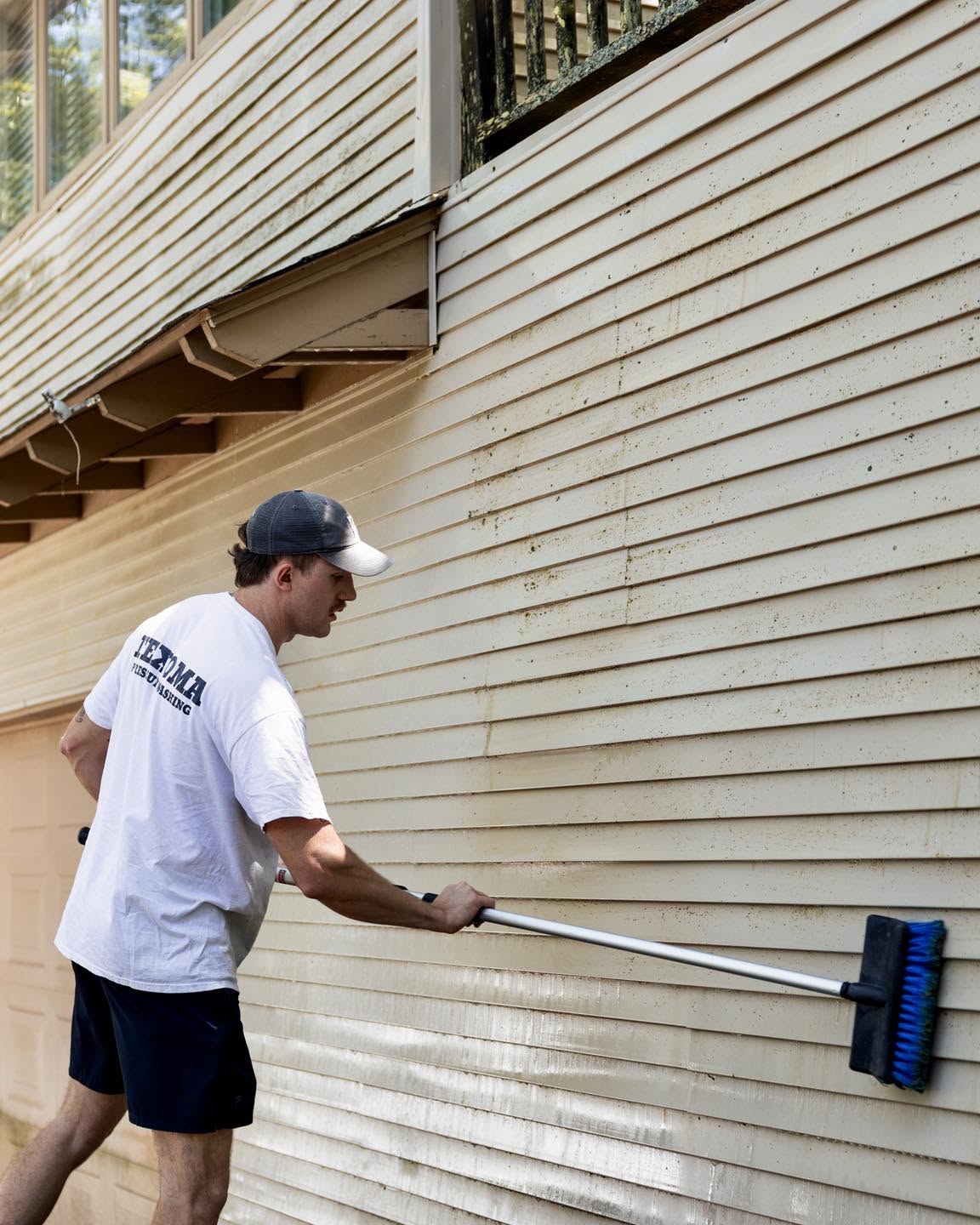
North-facing walls, shaded sides, and areas near sprinklers or downspouts. You'll see green or dark patches, especially on vinyl and painted surfaces. The growth settles into the siding texture and becomes harder to remove over time.
Driveways and Walkways
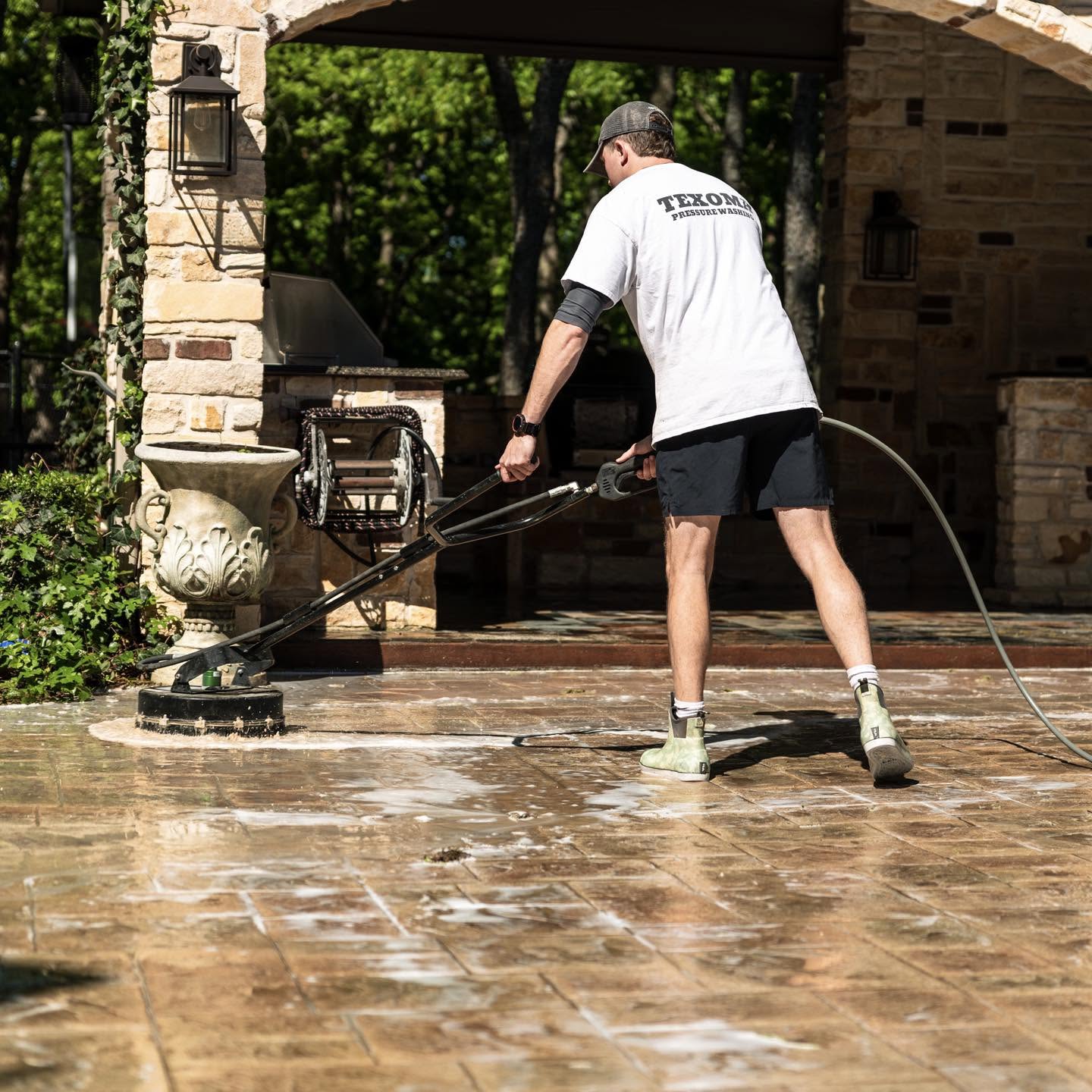
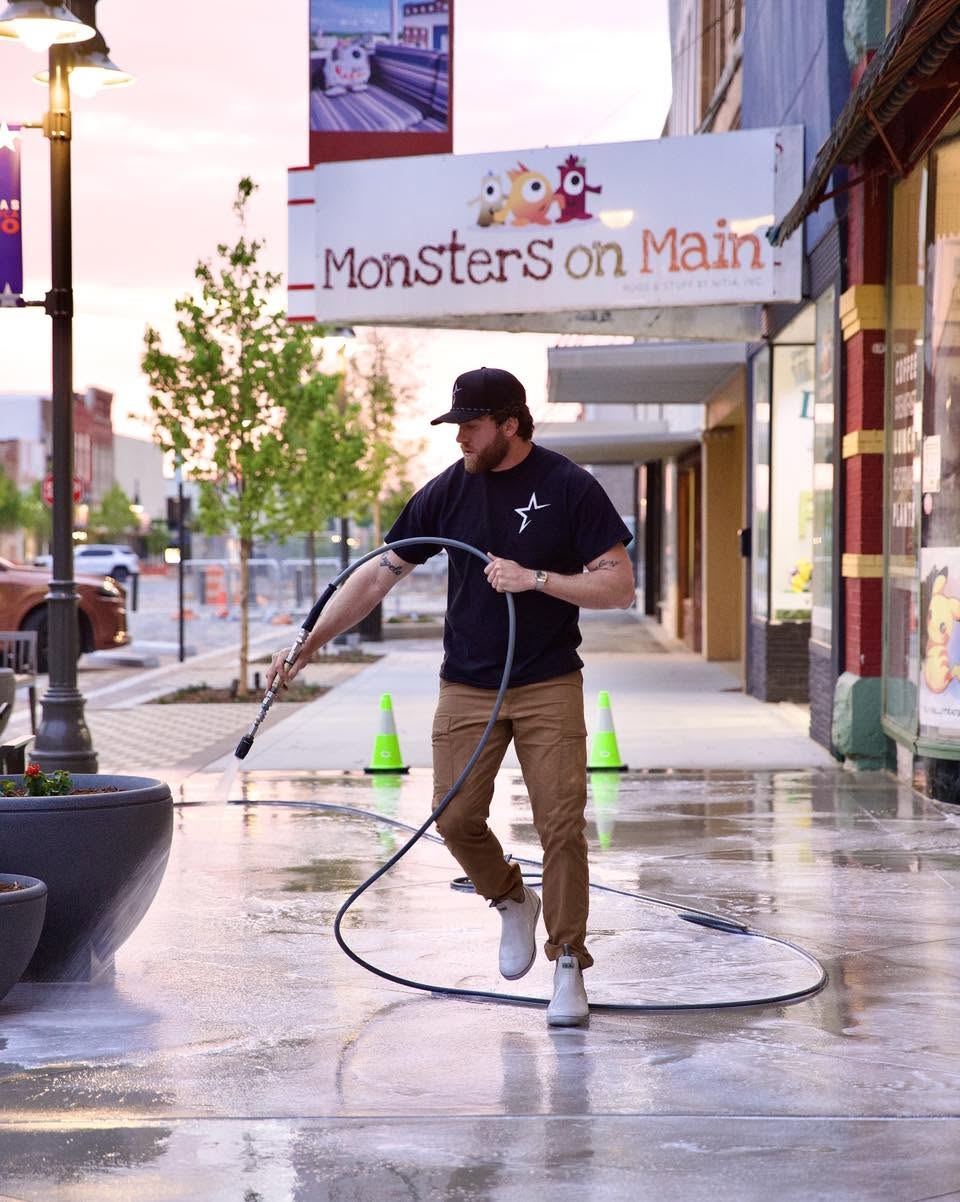
Concrete is porous — it holds moisture and organic matter, which is exactly what algae needs. Shaded driveways and walkways develop a green or black film that's not just ugly but genuinely slippery.
Fences and Decks
Wood and composite surfaces are especially vulnerable. Algae and mildew turn wood gray and create a slick surface. In advanced cases, mold can penetrate the wood and cause rot — which means replacement, not just cleaning.
Patios and Pool Decks
These surfaces stay damp and collect organic debris (leaves, pollen, sunscreen residue). Algae growth here is both an appearance and a safety issue — slick pool decks are a real hazard.
Why Slippery Growth on Concrete Is More Than Just Ugly
This deserves its own mention because it's the most underappreciated risk.
Algae on concrete creates a thin, invisible film that becomes dangerously slick when wet. If your walkway, driveway, or patio feels slippery after rain or sprinkler runoff, that's not water on a clean surface — that's algae.
It's a particular concern for:
- ▸Walkways where guests enter the home
- ▸Pool decks and patios
- ▸Driveways where kids play
- ▸Any surface older family members walk on
Professional cleaning doesn't just improve the look — it removes the hazard.
Why It Keeps Coming Back
Here's the frustrating part: if you just pressure wash growth off, it comes back. Often within weeks.
That's because pressure washing removes the visible layer but doesn't kill the organism at its root. The algae or mildew is still alive in the pores of the surface, and it regrows.
Soft washing solves this. Low-pressure water combined with specialized detergents kills organic growth at the source. The solution dwells on the surface, breaks down the organism completely, and then gets gently rinsed. Because the growth is actually dead — not just rinsed away — the surface stays clean far longer.
When It's Time to Call a Professional
If you're seeing any of the following, it's time:
- ▸Visible green, black, or dark patches that are spreading
- ▸Surfaces that feel slick when wet
- ▸Roof streaks that are visible from the street
- ▸Siding that looks dull or stained even after a rain
- ▸Wood surfaces that have turned gray or show fuzzy growth
A professional can assess what type of growth you're dealing with, which surfaces are affected, and the right method for each — soft washing for siding and roofs, surface cleaning for concrete, calibrated pressure for wood.
Don't Let It Take Over
Organic growth on your exterior isn't going to improve on its own. The longer it sits, the more damage it does — and the harder it is to fully remove.
If you're seeing mold, mildew, or algae on your home's exterior, Texoma Pressure Washing can help. We provide professional exterior cleaning throughout Sherman, Denison, and the surrounding Texoma area — and we kill growth at the root, not just the surface. Request a free quote and let's get your property clean and protected.