
If you've lived in North Texas for any length of time, you know the drill. By July, the heat index is over 100°. By March, everything is covered in yellow pollen. Spring brings storms that roll through with little warning. Fall drops leaves by the truckload. And winter? It's mild — but we still get enough freezing nights to matter.
What you might not realize is that each of these weather patterns is actively working on your home's exterior, year after year. The sun is breaking down your siding. The humidity is feeding algae. The storms are testing your gutters and roof. The wind is carrying dust and pollen into every surface texture.
Understanding how North Texas weather affects your home isn't just interesting — it's the foundation of a maintenance strategy that protects your property and saves you thousands in premature repairs and replacements. Here's what each element does, season by season.
Spring: Pollen, Storms, and Rapid Growth
Spring in the Texoma area — March through May — is the most active season for exterior surface changes. Three things happen simultaneously:
The Pollen Event
Every spring, North Texas gets blanketed in a layer of yellow-green pollen that coats cars, patios, driveways, and siding. This isn't just an annoyance — it's a nutrient delivery system for algae and mildew. Pollen settles on exterior surfaces, mixes with moisture, and provides the organic matter that these organisms feed on.
If your siding develops green algae quickly, spring pollen is a major contributor. The growth that appears in May and June often traces directly back to the pollen accumulation of March and April.
Storm Season
Spring storms across Sherman, Denison, and the surrounding area bring wind, heavy rain, and sometimes hail. These storms:
- ▸Deposit leaves, twigs, and debris on roofs and in gutters
- ▸Test the integrity of roofing, siding, and flashing
- ▸Cause gutter clogs that lead to water overflow and siding staining
- ▸Blow dust and organic matter against the home's exterior
After storm season, gutters are often packed with debris that will cause problems during summer thunderstorms if not addressed.
Rapid Organic Growth
As temperatures warm and humidity rises, algae, mold, and mildew enter their most aggressive growth phase. Surfaces that looked clean in February can develop visible green or dark streaks by May — especially on north-facing walls, shaded siding, and concrete surfaces under tree cover.
Spring Maintenance Priorities
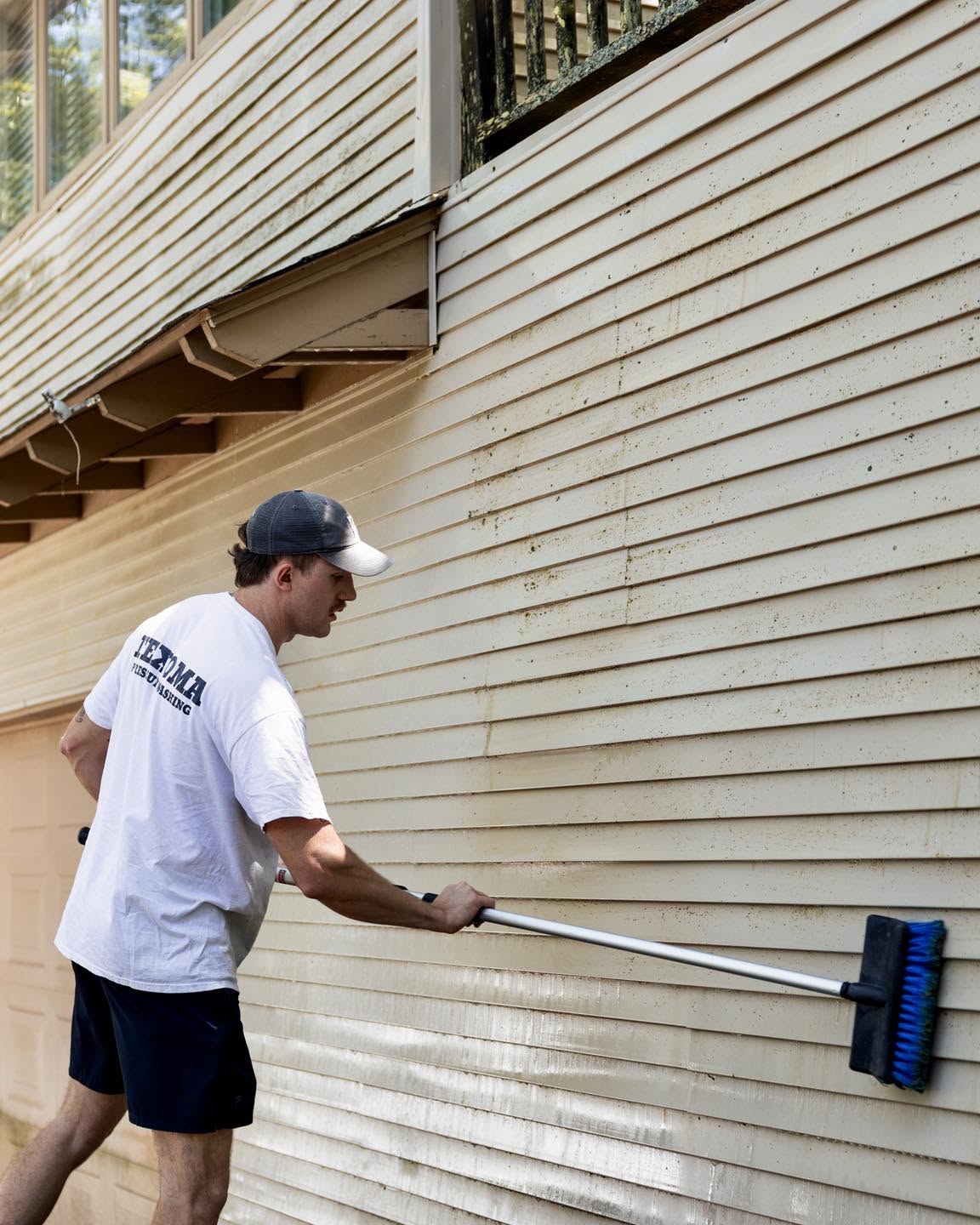
- ▸House washing — remove pollen accumulation and early algae growth before it spreads
- ▸Gutter cleaning — clear storm debris before summer thunderstorms arrive
- ▸Roof inspection — check for storm damage and algae streaking
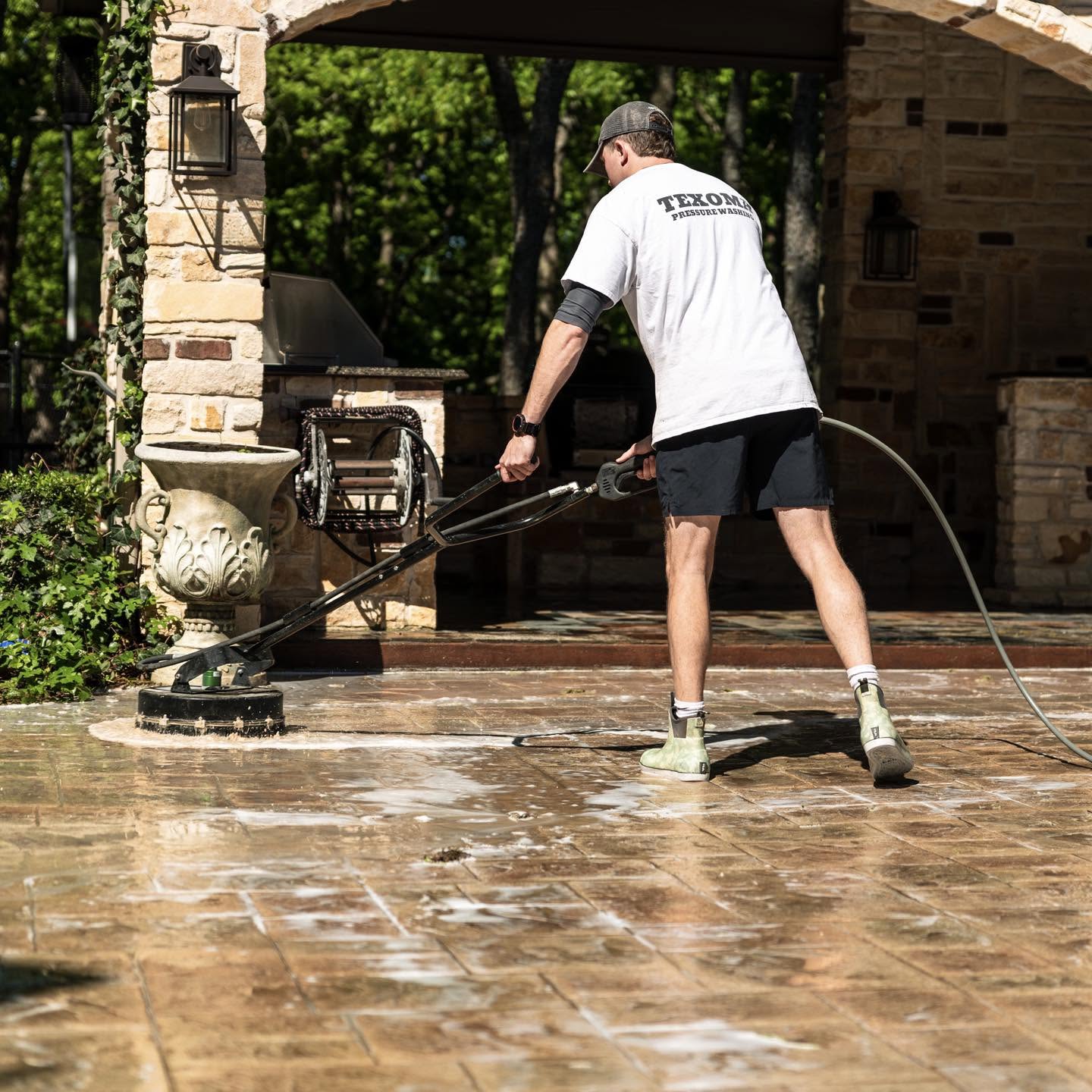
- ▸Driveway and walkway cleaning — remove organic growth before it becomes embedded
Summer: UV, Heat, and Drought Stress
Summer in North Texas — June through August — is defined by intense sun, high temperatures, and high humidity. While visible algae growth may slow slightly in the hottest weeks (some organisms go dormant in extreme heat), other forms of damage accelerate.
UV Radiation Damage
The North Texas sun is relentless. UV radiation breaks down the chemical bonds in paint, stains, siding pigments, and roofing materials. Over time, this causes:
- ▸Fading — colors become lighter and less vibrant
- ▸Chalking — a powdery residue forms on painted surfaces as the paint binder breaks down
- ▸Oxidation — vinyl siding develops a chalky, dull film as the surface degrades
- ▸Stain breakdown — wood stains and sealants lose their protective qualities faster
UV damage is cumulative and irreversible without refinishing. Regular cleaning doesn't stop UV damage, but it removes the contaminants that accelerate it and keeps surfaces looking their best between refinishing projects.
Thermal Expansion and Contraction
North Texas summer temperatures swing dramatically — 100°+ during the day, dropping to 75° at night. This causes exterior materials to expand and contract daily, which stresses caulking, seals, flashing, and fasteners. Over years, this thermal cycling contributes to:
- ▸Cracked caulking around windows and doors
- ▸Loose flashing and trim
- ▸Gaps that allow water intrusion
- ▸Stress cracks in stucco and mortar
High Humidity
Even during the hottest summer weeks, overnight humidity in North Texas remains high. This moisture settles on exterior surfaces every night and fuels continued algae and mildew growth — particularly in shaded areas that don't dry out during the day.
Summer Maintenance Priorities
- ▸House washing — if you didn't clean in spring, summer is the time to remove established growth before it deepens
- ▸Driveway and concrete cleaning — algae growth continues in shaded areas
- ▸Roof cleaning — treat before fall, when cooler temperatures reactivate aggressive growth
- ▸Deck and fence evaluation — assess whether wood surfaces need cleaning and refinishing before fall
Fall: Leaves, Debris, and Gutter Problems
Fall — September through November — brings relief from the heat, but it introduces a new set of challenges for your home's exterior.
Leaf Drop
As trees across Sherman, Denison, Pottsboro, and surrounding communities shed their leaves, gutters fill quickly. Clogged gutters are one of the most common and most damaging fall issues:
- ▸Overflow — water spills over gutter edges and runs down siding, causing staining and potential water intrusion
- ▸Weight — wet leaves and debris are heavy; they can pull gutters away from the fascia or cause sagging
- ▸Ice dams — in winter, clogged gutters contribute to ice dam formation that can damage roofing
Fall gutter cleaning is one of the most important maintenance tasks of the year. Properties surrounded by mature trees may need cleaning in both early fall and late fall to keep up with the leaf drop.
Decomposing Organic Matter
Leaves that fall on driveways, walkways, decks, and patios decompose over weeks and months. As they break down, they release tannins and organic compounds that stain concrete and wood surfaces. The brown stains you see on walkways and patios in late fall and winter are often the result of leaf tannins soaking into the surface.
Continued Algae Growth
Fall's cooler temperatures and continued humidity actually create a second growth window for algae and mildew. Surfaces that seemed to stabilize during summer heat may show renewed growth in October and November — particularly on north-facing walls and shaded concrete.
Fall Maintenance Priorities
- ▸Gutter cleaning — the most critical fall task; clear leaves before winter
- ▸Leaf removal from surfaces — clear leaves from decks, patios, and walkways before they stain
- ▸House washing — if growth has reappeared since spring cleaning
- ▸Driveway cleaning — remove leaf tannin stains before they set permanently
- ▸Deck and fence cleaning — prepare wood surfaces for staining before winter
Winter: Freeze-Thaw, Moisture, and Dormant Growth
Winter in North Texas — December through February — is mild compared to northern climates, but it still affects your home's exterior in important ways.
Freeze-Thaw Cycling
While we don't get months of frozen ground, North Texas does experience repeated freeze-thaw cycles throughout winter. Temperatures drop below freezing at night and rise above freezing during the day. This cycling is particularly damaging to concrete and masonry:
- ▸Moisture that has penetrated concrete pores expands when it freezes
- ▸Repeated expansion creates micro-cracking and surface spalling
- ▸Over years, this degrades the surface and shortens concrete lifespan
- ▸Algae and organic growth that hold moisture against the surface accelerate this process
This is one reason why cleaning concrete before winter matters — removing the organic growth that traps moisture helps protect the surface from freeze-thaw damage.
Dormant But Not Dead
Algae, mold, and mildew don't die in winter — they go dormant. The growth that was aggressive in summer and fall slows down, but it doesn't disappear. When temperatures warm in spring, the organism is still there and ready to resume growth. This is why winter cleaning can be effective — it removes dormant growth before it reactivates.
Wind and Dust
Winter in North Texas often brings dry, windy conditions that carry dust, dirt, and debris against your home's exterior. This accumulated dust mixes with spring moisture to create the perfect substrate for new algae growth — which is why spring cleaning is so important.
Winter Maintenance Priorities
- ▸Gutter cleaning — if not done in fall, clear gutters before winter rains
- ▸Concrete cleaning — remove organic growth before freeze-thaw cycles damage the surface
- ▸Post-storm inspection — check for damage after winter storms
- ▸Planning — schedule spring cleaning before the busy season
The Year-Round Maintenance Calendar
Here's a simple calendar for maintaining your North Texas home's exterior:
Spring (March–May)
| Task | Why | |---|---| | House washing | Remove pollen and early algae growth | | Gutter cleaning | Clear winter and storm debris | | Roof inspection | Check for storm damage and algae | | Driveway cleaning | Remove organic growth before it embeds |
Summer (June–August)
| Task | Why | |---|---| | House washing (if not done in spring) | Remove established growth | | Roof cleaning | Treat before fall reactivates growth | | Wood surface evaluation | Assess deck and fence condition |
Fall (September–November)
| Task | Why | |---|---| | Gutter cleaning | Clear leaves before winter — critical | | Leaf removal | Prevent tannin staining on surfaces | | Driveway cleaning | Remove leaf stains before they set | | Deck/fence cleaning | Prepare for staining before winter |
Winter (December–February)
| Task | Why | |---|---| | Concrete cleaning | Remove growth before freeze-thaw damage | | Gutter check | Ensure drainage before winter rains | | Maintenance planning | Schedule spring service before busy season |
How Each Surface Responds to Weather
Siding
Humidity and pollen drive algae growth; UV causes fading and oxidation; storms test the integrity of caulking and seals. Regular soft washing every 12 to 24 months keeps siding clean and prevents permanent staining.
Roof
UV degrades shingle granules; humidity feeds Gloeocapsa magma algae; storms deposit debris and test flashing. Soft-wash roof treatment every 2 to 3 years removes algae and protects shingle appearance.
Concrete
Freeze-thaw cycling damages porous surfaces; algae holds moisture that accelerates deterioration; oil and tannins penetrate and stain. Professional surface cleaning every 12 to 18 months and optional sealing protects the surface.
Wood (Fences, Decks, Trim)
UV breaks down lignin and causes graying; moisture fuels algae and rot; temperature swings stress fasteners and joints. Cleaning and refinishing every 2 to 3 years protects wood surfaces. For wood restoration and staining, our trusted partner North Texas Pressure Wash specializes in proper wood preparation before finishing.
Gutters
Spring storms and fall leaves cause clogs; overflow damages siding and foundations. Gutter cleaning twice a year — spring and fall — is essential.
The Bottom Line
North Texas weather doesn't give your home's exterior a break. Every season brings a different challenge, and the effects compound over time. But with a regular maintenance schedule tailored to our climate, you can protect your property, prevent premature deterioration, and keep your home looking its best year-round.
If it's been a while since your home's exterior was professionally cleaned — or if you want to set up a seasonal maintenance plan — Texoma Pressure Washing can help. We provide house washing, roof cleaning, driveway cleaning, gutter cleaning, and commercial pressure washing throughout Sherman, Denison, Pottsboro, and the surrounding Texoma area.
Request a free quote or call (903) 444-2704 — let's build a maintenance plan that works with the North Texas climate, not against it.
Frequently Asked Questions
Related Service
House Washing
Deep clean your siding and exterior surfaces using advanced soft washing technology for safe, effective results.
Learn About This Service